Why Epoxy Powder Coatings Are Ideal for Indoor Industrial Applications

Why Epoxy Powder Coatings Are Ideal for Indoor Industrial Applications

why-epoxy-powder-coatings-are-ideal-for-indoor-industrial-applications

The Indoor Coating Challenge That Gets Underestimated

Indoor industrial environments are often assumed to be less demanding than outdoor conditions—but the reality is quite different. Metal components inside factories, warehouses, and commercial facilities are constantly exposed to mechanical wear, oils, cleaning chemicals, and fluctuating temperatures.

Despite these challenges, coating selection is frequently driven by cost rather than performance. This leads to premature failures like peeling, corrosion, and surface degradation.

For such environments, epoxy powder coatings offer a technically superior and long-lasting solution, especially when consistency, durability, and protection are critical.

Key Technical Properties

1. Exceptional Adhesion Strength

Epoxy powder coatings form a chemically bonded, cross-linked film during the curing process. This creates:

  • Superior adhesion compared to liquid paints
  • Resistance to chipping during handling and assembly
  • Long-lasting coating integrity even under mechanical stress

This is especially important for precision applications like electrical enclosures and fabricated components.

2. High Chemical and Solvent Resistance

Industrial environments involve constant exposure to:

  • Cleaning agents
  • Acids and alkalis
  • Machine oils and lubricants

Epoxy coatings are engineered to withstand these conditions without degradation. Compared to alternatives, they:

  • Maintain surface finish
  • Prevent chemical attack on metal
  • Reduce maintenance cycles

This makes them a preferred choice for workshop equipment, machinery parts, and industrial furniture.

3. Reliable Corrosion Protection

When applied correctly with proper pre-treatment, epoxy coatings deliver:

  • Excellent resistance in salt spray testing (500+ hours as per ASTM B117)
  • Protection against humidity and condensation
  • Reduced risk of rust formation in indoor environments

This ensures longer product life and lower lifecycle costs—key concerns for OEMs and industrial buyers.

4. Uniform Film Build & Coverage

  1. Uniform Film Build & Coverage

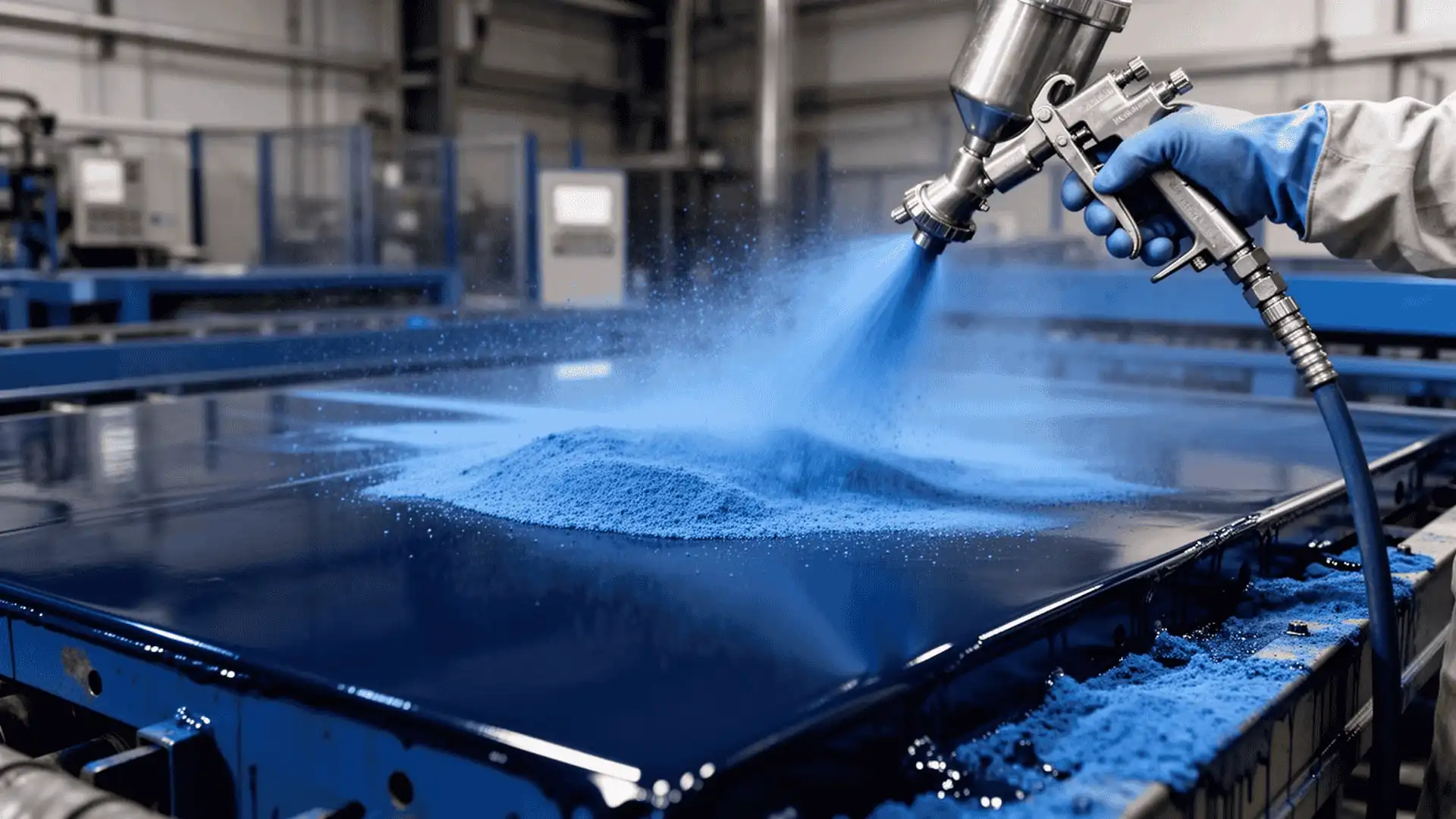
Using electrostatic application, epoxy powders provide:

  • Consistent film thickness (typically 60–100 microns)
  • Effective edge and corner coverage
  • Smooth finish even on complex geometries

This uniformity enhances both aesthetic quality and protective performance, which is often difficult to achieve with conventional liquid coatings.

Where Epoxy Coatings Are Used in Indian Manufacturing

Across India’s industrial ecosystem, epoxy powder coatings are widely specified for:

  • Electrical panel enclosures
  • Motor housings
  • Industrial shelving & storage systems
  • Steel furniture
  • Laboratory and medical equipment frames
  • Lighting fixture bodies

These applications demand:

  • Strong adhesion to metal
  • Resistance to oils and chemicals
  • Smooth and uniform finish
  • Long-term durability with minimal maintenance

Advanced epoxy formulations—such as those developed by experienced manufacturers like Vipraj Thermoset —are designed specifically to meet these performance expectations across diverse industrial segments.

Why Epoxy Powder Coatings Remain the Industry Standard

Epoxy powder coatings continue to dominate indoor applications because they combine:

  • Strong adhesion
  • Excellent chemical resistance
  • Superior corrosion protection
  • Consistent finish quality

Manufacturers working with reliable suppliers—such as Vipraj’s industrial coating range—benefit from formulations that are not only performance-driven but also aligned with modern industrial requirements like consistency and compliance.

The UV Limitation to Keep in Mind

It is important to note that epoxy powder coatings are not suitable for outdoor use.

Prolonged UV exposure can cause:

  • Chalking
  • Colour fading
  • Surface degradation

For outdoor or semi-outdoor applications, alternatives like:

  • Polyester powder coatings
  • Epoxy-polyester hybrids

should be considered instead.

Practical Guidance for OEMs and Fabricators

To maximize coating performance:

  • Use iron phosphate or zinc phosphate pre-treatment for better adhesion
  • Maintain proper curing cycles (typically 180–200°C for 10–15 minutes)
  • Choose the right finish (matte, satin, gloss) based on application
  • Ensure RoHS-compliant formulations for electrical and export applications

Partnering with a technically sound supplier—such as Vipraj Thermoset Pvt. Ltd. —ensures not just product availability but also application support, consistency, and performance reliability across batches.

Indoor industrial environments demand coatings that can withstand chemical exposure, mechanical stress, and operational wear—without compromising on finish or durability.

Epoxy powder coatings deliver on all these fronts, making them the most reliable and widely adopted solution for indoor metal applications.

For manufacturers seeking consistent performance, long-term protection, and professional finish quality, epoxy coatings remain a proven choice—especially when sourced from experienced and quality-focused brands like Viptone.

Contact Us WhatsApp